
A conservator's guide to storing your wedding dress properly — which materials protect your gown, how to pack it step by step, and the mistakes that cause lasting damage.
Your wedding dress carried you through one of the most meaningful days of your life. It deserves more than the back of a wardrobe in a plastic cover. With the right materials and a little care, you can help preserve it for decades — and potentially for generations.
We come from a family of textile conservators. The techniques here are the same ones we have applied to historic gowns in stately homes and museum collections for over fifty years. The reassuring part is that proper storage is simpler than most people think. You just need the right materials and a little time.
This guide covers everything: cleaning your dress, choosing the right materials, packing it properly, finding the best place to keep it at home, and checking on it over time. No guesswork — just practical, conservation-led care.
Why proper storage matters
Wedding dresses are particularly vulnerable over time. Delicate fabrics like silk, satin, tulle, and lace react to light, moisture, temperature changes, and the chemicals found in everyday materials. Without proper care, a stored dress can yellow, develop the brown spots known as foxing, attract moths, or begin to break down at the fibre level.
The most common culprit is often the very thing used to “protect” the dress. Plastic garment covers trap moisture and can release harmful gases as they degrade. Standard cardboard boxes contain acids that slowly transfer into the fabric. Even decorative boxes with coloured ribbons or printed designs can transfer ink and dye onto a gown.
The right approach uses conservation-grade materials — the same kind museums trust to protect irreplaceable textiles. The difference in cost between storing a dress properly and storing it badly is often surprisingly small.
When to start: don't wait
One of the most important things you can do is act quickly. Ideally, your dress should be professionally cleaned within a week or two of your wedding day. Even if it looks perfectly clean, invisible marks — perspiration, perfume, spilled drinks, dirt along the hem — can oxidise and darken over time. What is invisible now can become a permanent stain months later.
If you are reading this years after your wedding and your dress has been sitting in a wardrobe, that is completely fine too. It is never too late to start storing it properly. You may want to have it professionally cleaned first, especially if it has been kept in plastic or a non acid-free box, but the same principles apply.
The golden rule: have your dress professionally cleaned by a specialist bridal cleaner, not a standard high street dry cleaner. Bridal specialists understand delicate fabrics, embellishments, and structured gowns. Ask them not to press or tightly fold the dress before returning it, as you will be packing it yourself.
What you'll need
Before you begin, gather everything together. A clean, flat surface such as a bed or large table works best, and it is worth setting aside an uninterrupted hour to pack the dress carefully.
- An acid-free storage box sized to fit your dress
- Acid-free, unbuffered tissue paper
- Clean cotton gloves
- A clean, flat surface to work on
- Clean hands, with no hand cream or perfume
If you would rather not gather the materials separately, our Wedding Dress Box Pack brings together unbuffered tissue paper, cotton gloves, and conservator-written instructions in one kit — and every acid-free wedding dress box arrives with the same materials included.
Why unbuffered tissue matters
There are two kinds of acid-free tissue paper: buffered and unbuffered. Buffered tissue contains an alkaline reserve designed to neutralise acids, which works well for cotton and linen. Wedding dresses, however, are often made from silk, satin, or delicate blends, and alkaline buffers can damage protein-based or dyed fibres over time.
Unbuffered tissue is neutral pH and safe for delicate fabrics of all kinds. It is the option most conservators recommend when the exact fibre composition of a garment is unknown — which is why our tissue paper is unbuffered.
Choosing the right box size
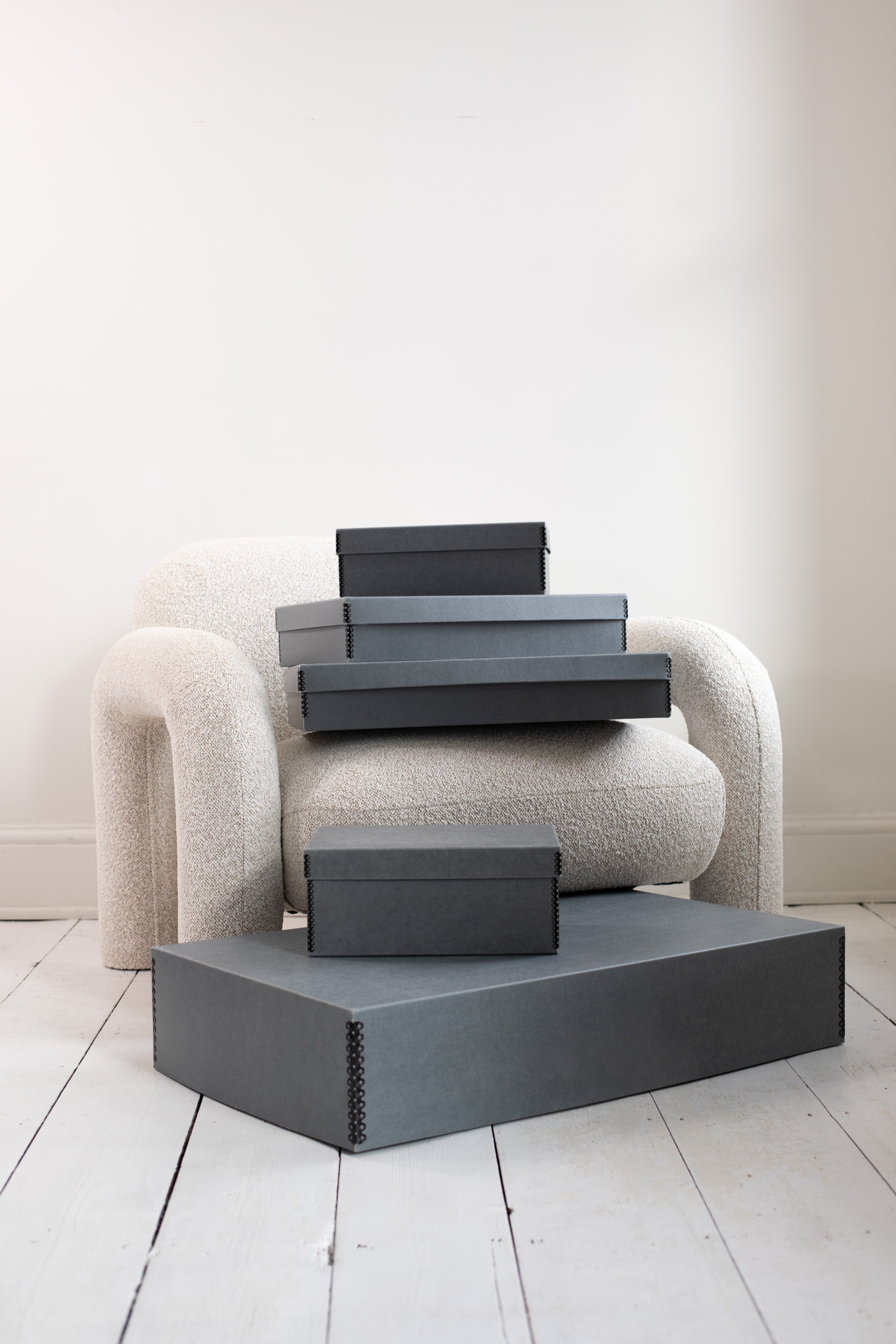
Your dress needs space to rest properly. A box that is too small creates tighter folds, more creasing, and unnecessary pressure on the fabric. As a general guide:
- The Standard box suits lighter dresses with fewer layers or minimal trains
- The Large box suits most A-line, sheath, and fitted gowns
- The Extra Large box is better for ball gowns, heavy trains, layered tulle, or fuller skirts
If you are unsure, it is usually better to size up. Your dress should sit comfortably inside the box, with tissue paper supporting every fold. Proper storage is about reducing stress on the fabric over time.
How to pack your wedding dress
Packing carefully makes a real difference to how well a dress stores over the years. A little extra care now helps reduce creasing, pressure, and long-term fabric stress.
Step 1: Prepare your workspace
Lay a clean white sheet or several sheets of acid-free tissue paper on a flat surface. A bed usually works well. Wash and dry your hands thoroughly, then put on cotton gloves. Natural oils from your hands can transfer onto delicate fabrics over time.
Step 2: Line the box
Line the bottom of your acid-free storage box with several sheets of tissue paper, allowing the tissue to come up and over the sides. This creates a protective layer around the dress once packed.
Step 3: Lay out the dress
Lay the dress flat and face-up on your clean surface. Take a moment to see where folds will naturally fall. The aim is to create as few folds as possible, and to keep them soft rather than sharply creased.
Step 4: Support the bodice
Gently scrunch tissue paper and use it to support the bodice, cups, or any structured areas. This helps the garment hold its shape and prevents pressure creasing over time.
Step 5: Fold the skirt
Starting from the hem, fold the skirt upwards in soft, wide folds towards the bodice. Place layers of tissue paper between each fold to prevent fabric-on-fabric pressure. If your dress has multiple tulle layers, separate these with tissue too.
Step 6: Place the dress into the box
Carefully transfer the folded dress into the tissue-lined box. It should sit comfortably without feeling compressed. If it feels too tight, a larger box is the better option.
Step 7: Fill empty spaces
Use loosely scrunched tissue paper to gently fill any gaps around the dress. This helps prevent shifting during storage and keeps folds supported. Avoid packing the box tightly.
Step 8: Wrap and close
Fold the overhanging tissue over the top of the dress to cover it fully, then place the lid on the box. Avoid sealing it with tape or plastic wrap — acid-free boxes are designed to allow gentle airflow, which helps create a more stable environment.
The conservator's approach: in textile conservation, sharp folds are avoided wherever possible. Instead, we use rolled tissue inside folds to create softer curves and reduce pressure on the fibres. Over time, hard creases can weaken delicate fabrics and increase the risk of splitting along fold lines. Extra tissue may feel excessive at first, but it makes a real difference over the years.
Don't forget the accessories
Your veil, shoes, headpiece, and accessories deserve the same care as the dress.
Veils
Store veils separately from the dress where possible, ideally in their own acid-free veil and accessories box. Fold loosely with tissue paper between the layers to prevent creasing and snagging.
Shoes
Stuff shoes lightly with acid-free tissue paper to help them hold their shape, then wrap and store them in an acid-free shoe box to protect against dust and creasing.
Headpieces and jewellery
Wrap delicate accessories individually in tissue paper and store them separately. Metal clips, pins, or jewellery should not sit directly against fabrics, as tarnishing can leave marks over time.
Where to store your dress
The box is only part of the process. Where you keep it matters just as much.
The ideal environment is cool, dry, dark, and well ventilated. Stable temperatures and low humidity reduce the risk of yellowing, mould, and fabric deterioration over time.
The best place to store your dress
A wardrobe or cupboard in a regularly used bedroom or spare room is usually ideal. Keep the box on a shelf rather than directly on the floor, and away from exterior walls, radiators, or direct sunlight.
Places to avoid
Avoid attics and lofts, basements and cellars, garages, damp spaces, and areas with large temperature changes. These tend to experience fluctuating humidity, dust, pests, and poor airflow — all of which can damage delicate fabrics.
Do
- Store the box on a shelf inside a wardrobe or cupboard
- Choose a room with stable temperature and airflow
- Keep the dress away from direct sunlight and heat
- Allow the box to breathe naturally
Don't
- Store the box in plastic
- Tape the box shut
- Place the box directly on the floor
- Store the dress in hot, damp, or poorly ventilated spaces
Checking on your dress over time
Proper storage is not something you do once and forget. A little ongoing care makes a big difference over the years.
Every 6 months
Open the box and check the dress for any signs of yellowing, spotting, dampness, or pest activity. If all looks well, gently refold the dress along slightly different lines to help prevent permanent creasing.
Every 2 to 3 years
Replace the tissue paper inside the box. Over time, tissue naturally absorbs moisture and environmental particles, so refreshing it helps maintain a cleaner environment.
If you notice a problem
Yellowing, foxing, mildew, or staining should be assessed by a professional textile conservator or specialist bridal cleaner. Avoid treating marks yourself — the wrong cleaning methods can permanently damage delicate fabrics.
A note on moths
Moths are particularly attracted to natural protein fibres like silk and wool. If your dress contains these, store it in a clean, well-maintained wardrobe and check it periodically for signs of activity, such as small holes or dusty residue. Moth deterrents can be used nearby in the wardrobe, but avoid placing anything directly inside the storage box with the dress.
Common wedding dress storage mistakes
After decades working with textiles and delicate garments, these are the mistakes we see most often.
Leaving the dress in plastic
Plastic garment covers are made for short-term transport, not long-term storage. They trap moisture, reduce airflow, and can release chemicals as the plastic degrades.
Using standard cardboard boxes
Regular cardboard contains acids that slowly transfer into fabric, causing yellowing and deterioration. Only use materials specifically labelled as acid-free.
Choosing storage on looks alone
Decorative boxes may look beautiful, but printed inks, coloured ribbons, adhesives, and dyed materials can all transfer onto fabric over time. Proper preservation starts with safe, conservation-grade materials.
Forgetting about the dress completely
Even properly stored garments benefit from occasional checks. Refolding the dress and replacing tissue periodically supports long-term preservation.
Frequently asked questions
Why shouldn't I store my wedding dress in plastic?
Plastic covers trap moisture and restrict airflow, creating conditions where mould, yellowing, and fabric deterioration are more likely. Degrading plastic can also release chemicals that damage delicate fabrics.
Do I really need acid-free tissue paper?
Yes. Standard tissue contains acids and chemicals that can transfer onto fabric over time. Acid-free, unbuffered tissue creates a neutral protective layer that helps reduce yellowing and long-term damage.
What's the difference between buffered and unbuffered tissue paper?
Buffered tissue contains an alkaline additive designed to neutralise acids. While this works well for cotton and linen, it can damage protein-based fibres like silk and wool over time. Unbuffered tissue is generally the safest choice for wedding dresses.
Can I store my wedding dress hanging up?
For long-term storage, flat storage is usually better. Hanging heavy garments for years places stress on the shoulders, bodice, straps, and embellishments, which can stretch or distort the fabric.
How do I protect my dress from moths?
Store the dress in a clean wardrobe or cupboard and check it regularly for signs of moth activity. Avoid placing mothballs or strong deterrents directly inside the box, as they can damage delicate fabrics.
My dress has already been stored badly. Is it too late?
Not necessarily. Remove the dress from plastic or unsuitable materials as soon as possible and have it professionally assessed or cleaned if needed. In many cases, proper storage from now on still makes a significant difference.
Should I clean my dress before storing it?
Yes — professional cleaning is strongly recommended. Invisible marks like perspiration, perfume, and food residue can oxidise over time and become permanent stains.
How often should I check my dress?
We recommend checking every six months and replacing the tissue paper every few years to help maintain a clean, stable environment.
Can I store accessories in the same box?
It is usually better to store veils, shoes, jewellery, and accessories separately where possible. This reduces pressure on the dress and helps prevent marks or snagging from metal components or embellishments.