
A good dress is an investment — in fabric, in tailoring, and in the version of you who wears it. Storing it properly is the difference between a piece you will still love in ten years and one that disappoints you the next time you reach for it.
What you'll need
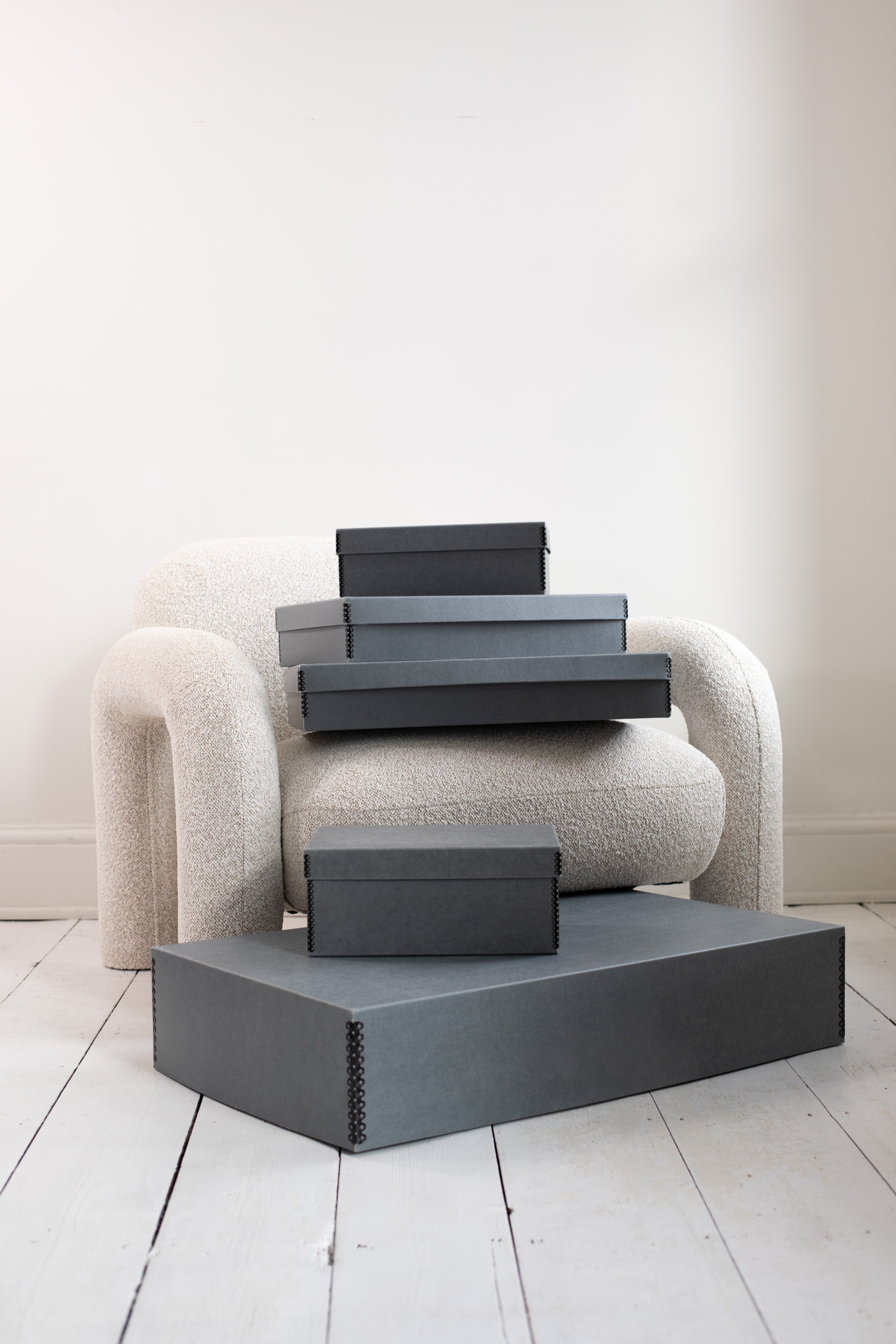
- Acid-free storage box — for boxing structured or beaded gowns flat
- Acid-free tissue paper — to pad bodices, support skirts and prevent crease lines
- Tyvek Garment Bag — for hanging dresses that need to stay vertical
- Wide padded hangers — to support shoulders without leaving marks
- Constrain Moth Spray — to treat the wardrobe space before storage
- Pheromone Moth Traps — for ongoing pest monitoring
Designer dresses are usually made from delicate, high-performance fabrics — silk crepe, duchess satin, chiffon, beaded tulle, hand-finished lace. The same things that make them beautiful also make them temperamental. Heat, light, friction, and the wrong hanger can quietly undo months of couture work in a single summer.
We come from a family of textile conservators, and the principles we use to look after museum gowns translate beautifully to a domestic wardrobe. Here is how to do it properly.
Why standard wardrobes are the enemy
Most of us hang our nicest dresses on the same wire or plastic hangers we use for everything else, behind a thin plastic dry-cleaning bag, in a wardrobe packed too tight to breathe. Each of those is a slow-motion problem.
Wire hangers create permanent shoulder dimples in soft fabrics. Plastic dry-cleaning bags trap moisture and slowly release chemicals that can yellow silk and weaken dyes. Tightly packed wardrobes crush sequins, crease delicate pleats, and create the warm, undisturbed corners that clothes moths love. Sunlight from a nearby window will fade rich colours in months.
None of this is dramatic. It is the slow accumulation of small wrongs. The dress just looks a little tired, a little limp, a little not-quite-right when you take it out — and it never quite goes back to how it was.
Step one: clean before you store anything
This applies to anything you are putting away for more than a few weeks. Body oils, perfume, deodorant traces, drink splashes, and food residue are all invisible when fresh and stubbornly visible six months later. They also draw moths to the most delicate fibres.
Send anything structured or beaded to a specialist dry cleaner who handles couture. For washable pieces, follow the care label closely. Never store a dress that has been worn — even for an hour — without cleaning it first.
Step two: use the right hanger
Forget wire, and forget thin plastic. Designer dresses want broad, padded, shaped hangers — wide enough to support the natural line of the shoulder, padded enough to spread the weight of the fabric, and shaped to follow the shoulder curve. Our padded hangers are made for exactly this.
Heavy beaded or embellished pieces shouldn't be hung at all — the weight pulls the fabric out of shape over time. Fold them flat with acid-free tissue between the layers and lay them in a drawer or an acid-free storage box.
Step three: cover with Tyvek, never plastic
This is the single most important upgrade you can make. The plastic cover the dry cleaner gives you is meant to protect the dress on the journey home — not to live on the hanger for the next decade. Plastic blocks airflow, traps residual cleaning solvents and humidity, and slowly releases plasticisers that yellow fabric.
What you want is a Tyvek garment bag. Tyvek is a remarkable conservation material — it looks and feels like soft paper but is made of fine spunbonded polyethylene fibres. It is chemically inert, breathable in both directions, water-resistant, dust-proof, light-blocking, and tear-resistant. It is the same material conservators wrap historic costume in at the V&A and the Metropolitan Museum, and it is exactly what your favourite designer pieces deserve.
Slip the dress onto a padded hanger, zip it inside a Tyvek garment bag, and it is protected from light, dust, fingerprints, moths, humidity changes, and everything else the wardrobe might throw at it.
Step four: give it room to breathe
Spacing matters. A wardrobe so packed that nothing can move is a wardrobe that creases, distorts, and harbours pests. Aim for two to three centimetres of clear air between hung pieces — your dresses shouldn't touch each other, and they certainly shouldn't be squashed against the back wall.
If your wardrobe is the wrong shape and the hem of a long dress drags on the floor, hang it from the hem instead (most evening dresses have hidden hem loops for exactly this reason) or fold it carefully into a wide acid-free box.
Step five: pick a sensible spot
The same conditions that protect cashmere protect couture: cool, dark, dry, with steady humidity. Bedroom wardrobes are usually fine. Avoid lofts (extreme temperature swings), basements (damp), spare rooms above garages, and any wardrobe directly against an external wall in winter (condensation).
If a wardrobe is in a sunny room, keep the doors closed. UV light fades dyes faster than almost anything else.
Step six: pest protection (yes, really)
Silks, wool blends, and anything with natural fibres are vulnerable to clothes moths. Tuck a discreet pheromone moth trap into a corner of the wardrobe, and treat the empty wardrobe lightly with Constrain Moth Spray once a year — empty it out, spray the back, sides, and shelves, let it dry fully, then put everything back. It is the same approach professional conservators take with permanent collections.
Step seven: check on them
Every couple of months, take each dress out, give it a gentle shake, look it over for any signs of damage, and put it back. It is a small ritual, but it catches problems early — and there is something quietly satisfying about it.
Frequently asked questions
Should I store dresses in the dry cleaner's plastic?
No. It is fine for the journey home, but take it off as soon as you are back. Plastic bags are the single most common cause of yellowing on stored silk and wool.
Can I hang heavily beaded dresses?
Only short-term. The weight of beads or sequins will pull the fabric out of shape over months. Lay them flat with acid-free tissue between layers for long-term storage.
Do I really need a Tyvek bag instead of cotton?
Cotton is fine — better than plastic — but it is not as effective at blocking dust, light, and pests as Tyvek. For pieces you really care about, Tyvek is the conservator's choice.
How often should I rotate them?
Take each dress out, look it over, and give it a shake-out every two to three months. It is the easiest way to spot trouble early.
The dress that gets stored properly is the dress you will still want to wear in fifteen years. Worth the extra ten minutes.