
Shoes get the worst end of the deal. We trust them with the daily mileage of our lives, then leave them in the bottom of the wardrobe in a tangled pile. A little intentional storage transforms how long they last — and how they look when you put them on.
What you'll need
- Acid-free shoe storage boxes — lidded, breathable, and the right shape for proper long-term storage
- Acid-free tissue paper — to stuff the toe and protect leather surfaces
- Cedar shoe trees — to hold shape and absorb moisture
- Tall boot shapers — to keep knee-high boots upright and crease-free
- Leather conditioner — to feed the leather before storage
- Renaissance Wax — for a final protective layer on heritage or favourite leather
- Suede & nubuck brush kit — for cleaning and reviving suede shoes before they go away
This is the bit nobody tells you when you spend serious money on a pair of leather boots: the storage matters as much as the wear. Heels collapse without support, leather dries out and cracks, suede fades in light — and all of it can be prevented with twenty minutes of care twice a year.
What goes wrong in storage
Three things ruin stored shoes. First, collapse — leather and suede uppers slowly slump out of shape if there is nothing inside to support them, and once a heel or vamp has caved in, it is almost impossible to recover. Second, moisture and mould — damp shoes stored in a sealed plastic box are a petri dish, and even a slightly humid wardrobe can speed up leather deterioration. Third, light and dust — direct sunlight fades dyes and dries leather, and dust grinds into the surface every time you brush it off later.
All three are easy to prevent.
Step one: clean before storing
Always. A leather boot that goes into a box muddy will come out months later with the dirt baked permanently into the grain. Salt residue from winter pavements is even worse — it draws moisture out of the leather and creates white tide-marks that take serious effort to remove.
Brush off loose dirt with a soft brush, wipe the uppers down with a slightly damp cloth, and let them dry naturally at room temperature. Never put leather near a radiator — the heat dries the natural oils out and the leather cracks within months.
Step two: condition leather and protect suede
Leather is skin. It needs the equivalent of moisturiser. Once it is clean and dry, work in a good cream conditioner with a soft cloth — a little goes a long way — and let it absorb fully before storing. This keeps the leather supple and prevents the cracking you see on neglected pairs.
For finer-grain leather and heritage pieces, conservators have used Renaissance Wax for decades — a museum-grade microcrystalline wax developed in the British Museum's research laboratories in the 1950s. It is pH neutral, does not yellow or stain, and forms an invisible water-resistant barrier that protects the leather without affecting its colour or texture. A thin film, gently buffed, lasts months. (See our separate guide on restoring leather with Renaissance Wax.)
For suede and nubuck, brush gently with a suede brush to lift the nap, then apply a dedicated suede protector spray.
Step three: stuff them properly
Empty shoes lose their shape. Boots flop sideways, heels sag, and toe boxes crease. The classic solution is acid-free tissue paper or a shoe tree.
For boots: use a tall boot shaper or stuff with rolled-up acid-free tissue paper to keep the leg upright. Don't use newspaper — the inks transfer to the leather over time.
For heels: gently fill the toe box with crumpled acid-free tissue. This holds the shape and prevents the vamp creasing.
For everyday leather shoes: cedar shoe trees are a beautiful upgrade — they hold the shape and absorb residual moisture from your foot. Insert them while the shoes are still warm from wearing.
Step four: pick the right box
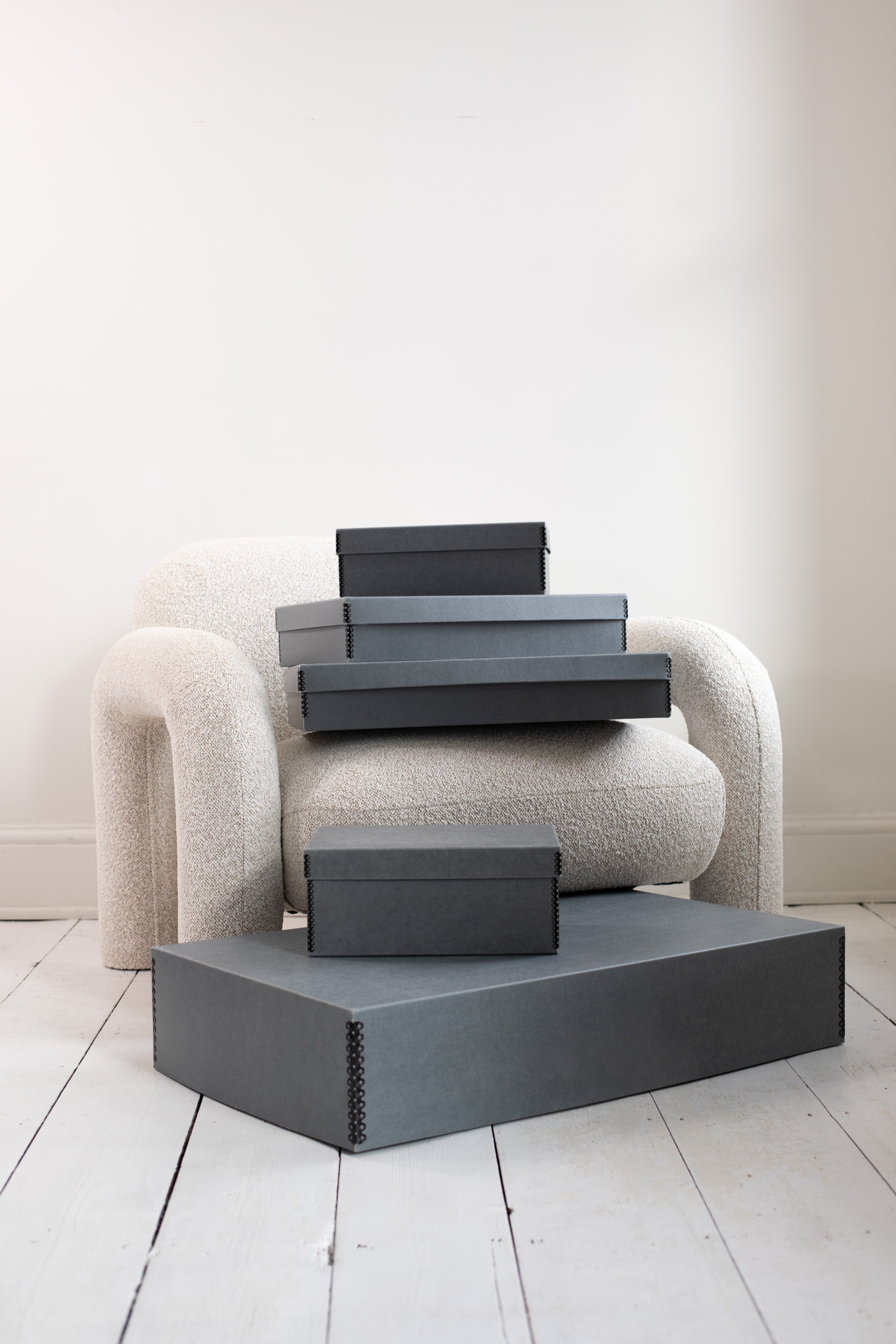
The brand box your shoes came in is fine for the journey home, but most are made of standard cardboard that contains acids, which slowly transfer to leather and suede. For shoes you actually care about, an acid-free shoe storage box is the upgrade worth making.
Our acid-free shoe boxes come in Mid Heel and High Heel sizes — both deep enough to fit the shoe with proper tissue support, made from unbuffered, acid-free board, and sturdy enough to stack. They protect against light, dust, and the slow chemical damage that ordinary cardboard causes.
If you would rather see your shoes, transparent boxes work — but check they are made of an inert material (polypropylene is fine) and never store leather in airtight plastic for long periods. A little airflow prevents mould.
Step five: store somewhere sensible
Cool, dark, dry, with a steady temperature. The bedroom wardrobe is usually perfect. Avoid:
- Lofts and basements — temperature swings and humidity wreck leather.
- Direct sunlight — fades dyes within weeks.
- Plastic bags inside the box — traps moisture, encourages mould.
- Stacking too high — boxes at the top of a heavy stack get crushed.
Step six: rotate and check
Don't wear the same pair two days running — leather needs 24 hours to fully dry out from the previous wear. And every couple of months, take stored shoes out, give them a quick look-over, and let them air for an hour before putting them back. It catches mould, mildew, and pest problems early.
Frequently asked questions
Are silica gel packets useful?
Yes — a fresh silica gel sachet inside the box helps control humidity, especially for long-term storage of leather. Replace them once a year.
How do I store winter boots through summer?
Clean thoroughly, condition the leather, stuff with tall boot shapers or rolled tissue, place in an acid-free box, and store cool and dark. Check them once a month.
Can I store shoes in the original brand box?
For a few months, fine. For longer-term storage of pieces you really care about, switch to acid-free — standard cardboard slowly leaches acidic compounds into leather and suede.
What's the best way to keep boots upright?
A proper boot shaper or boot tree if you will use them often, otherwise tightly rolled acid-free tissue paper — never newspaper.
A well-stored shoe is a shoe you will still love three years from now. Worth the box.