DRY CLEANING SPONGE

Sale price£9.50
Size: Small · 76 × 152 × 20mm

Some things cannot be washed. This is for those.

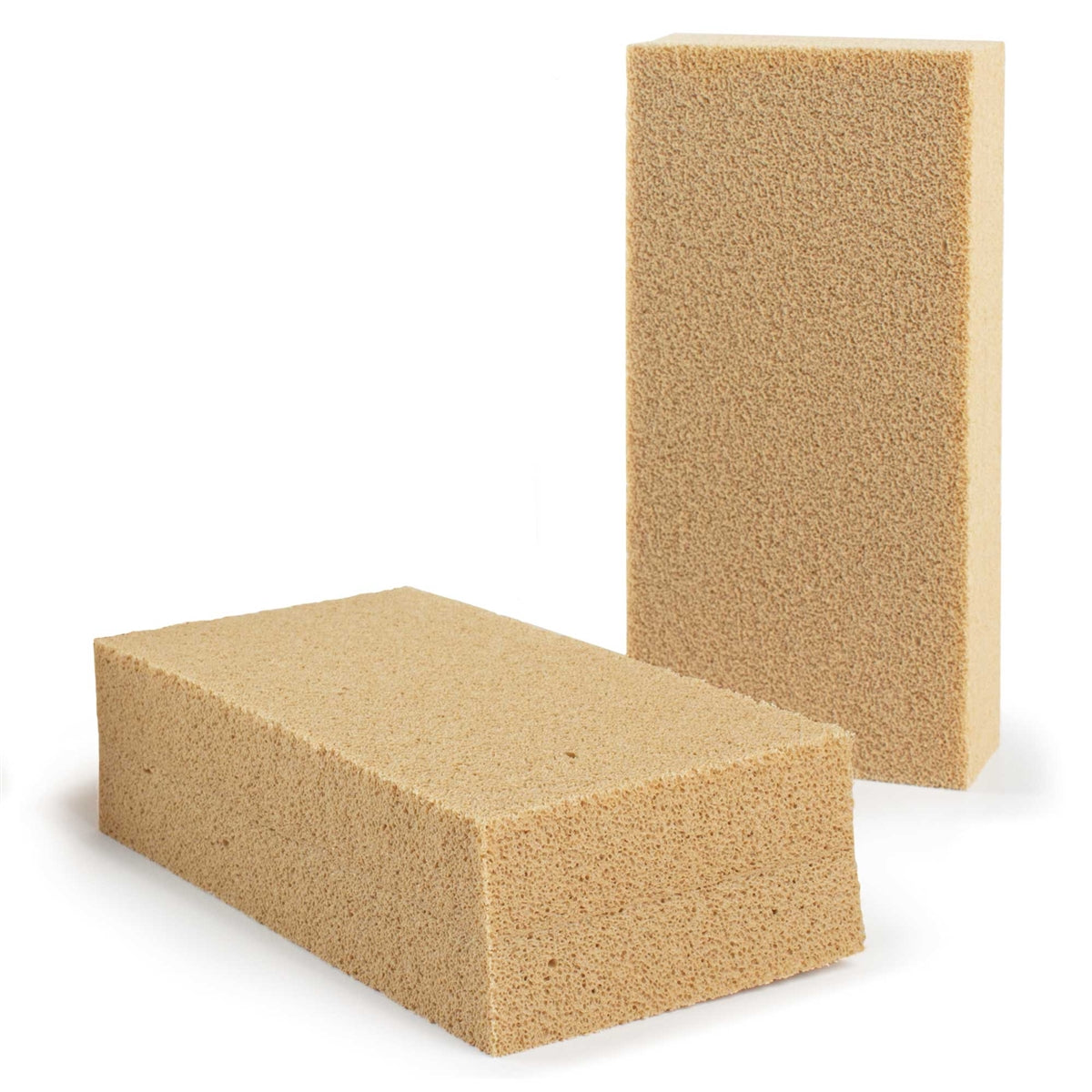
A block of vulcanised natural rubber, used completely dry, that cleans the way a pencil eraser does: you wipe, the dirt moves into the sponge, the sponge crumbles a little and takes the dirt with it. No water, no spray, no residue — just a quick pass of the vacuum to lift the crumbs. Which is why conservators keep one in the kit for books, paper and textiles, and why fire restorers buy them by the box.

At home it is quietly brilliant on everything that water would ruin: velvet sofas, silk and linen lampshades, headboards, curtains, suede, leather, book covers, wallpaper and matt-painted walls. Dust, soot, smoke film, pet hair, the grey bloom that settles on fabric and makes a room look tired. Two sizes — slim for shades and books, a deeper block for sofas and walls.

Learn more

What makes it different

Most cleaning is wet: a cloth, a spray, a solution. On velvet, silk, suede, paper and old textiles, wet is exactly the problem — tide marks, shrinkage, colours on the move, pile that never quite recovers. The dry cleaning sponge sidesteps all of it. Nothing touches the surface but the sponge.

It is a block of vulcanised natural rubber with an open cell structure. Wipe it across a surface and the particles — dust, soot, smoke film, lint, hair — are lifted into the cells rather than pushed around. As it works, the face crumbles away a little, exactly like a pencil eraser, and the crumbs carry the dirt with them. A light vacuum removes both. When a face goes grey, turn to a clean one; for fiddly corners, cut a wedge off with a sharp knife.

It was developed for fire restoration, where soot has to come off wallpaper and painted walls without smearing. Conservators adopted it for books, paper, dry mould and fragile textiles, and it has lived in their kits ever since. We think it belongs in a drawer in every house that owns something velvet.

How to use

Use it completely dry. Wipe in short, light strokes — with the pile on velvet — and let the sponge do the lifting rather than pressing hard. It will crumble a little as it works; that is the point. Finish with a light pass of the vacuum. Test first on a hidden area, such as the back of a cushion or the underside of a shade. If it does get wet, rinse in cold water with a little soap and let it dry completely before using it again — it only cleans dry.

Suitable for

  • Velvet, chenille and upholstered furniture
  • Silk, linen and paper lampshades
  • Suede, nubuck and leather
  • Books, paper, maps and prints
  • Curtains, headboards and wall hangings
  • Wallpaper, matt paint, painted wood and metal

Good to know
  • Small, 76 × 152 × 20mm — slim and easy to control, for lampshades, books, picture mounts and smaller areas
  • Large, 76 × 152 × 45mm — a deeper block with a fuller grip, for sofas, headboards, curtains and walls
  • For dry soiling: dust, soot, smoke film, lint and pet hair. Liquid spills and grease stains need a different treatment
  • Made from vulcanised natural latex rubber — avoid if you have a latex allergy
  • Wears down as it works. Keep it dry and out of sunlight between uses
  • Made in the USA

Learn More

Why conservators keep one in the kit

Cleaning without water or chemicals, for the surfaces that cannot take either.

No water

No tide marks, no shrinkage, no colour run. It suits every fabric and finish that should never be cleaned wet.

Nothing left behind

There is no spray or solution, so nothing is left in the fibres, on the paper or in the leather. The dirt leaves with the crumbs.

Lifts, not scrubs

Dirt transfers into the sponge instead of being rubbed across the surface — gentle on pile, nap, gilding and old paper.