
In short: empty and vacuum the wardrobe, treat the empty surfaces, store clean natural fibres in Tyvek bags, and put the pheromone trap in the room, not in the wardrobe — the one mistake that makes things worse, because the trap attracts moths to wherever it hangs.
Most people only think about clothes moths after the damage is done — a bare patch on a favourite cashmere jumper, a hole through the elbow of a wool jacket, a winter coat retrieved from storage with the lining quietly eaten away. By the time you see the damage, the moths have been busy for months. The good news: moth-proofing a wardrobe properly is straightforward. The bad news: with so much advice circulating from unverified sources, the most common tip of all — “put a moth trap in your wardrobe” — actively makes the problem worse.
What you'll need
- Constrain Moth Spray — the museum-grade, water-based, residual treatment for empty wardrobes and storage spaces
- Pheromone Moth Traps — for monitoring activity in the room, never inside the wardrobe
- Knitwear Storage Bags — breathable, pest-proof storage for folded knits
- Acid-free tissue paper — for layering between folds
- Tyvek Garment Bag — for hanging coats, jackets and tailoring
- Wool & Cashmere Wash — for the pre-storage clean every piece needs
- Soft natural-bristle brush — for structured wool pieces that can't be washed
Why your wardrobe is a moth restaurant
The webbing clothes moth (Tineola bisselliella) and its slightly less famous cousin the casemaking clothes moth (Tinea pellionella) cause nearly all the damage in UK homes. The adults are tiny — five to eight millimetres long, cream-gold, and surprisingly poor at flying. They are not what eats your jumpers. The damage is done by the larvae, which hatch from eggs the female lays directly on the fabric and then spend weeks chewing through anything containing keratin: wool, cashmere, alpaca, silk, fur, feathers, sheepskin. The larvae will also happily feed on cotton and linen if those fibres carry skin oils, perspiration, or food residue — which is almost any garment that has been worn before being put away.
A single female can lay up to a hundred eggs. In a centrally heated UK home there can be two or even three full life cycles a year, and larvae and pupae can survive for months without feeding. This is why an unchecked infestation rarely stays small.
What moths want is exactly what a wardrobe provides: dark, undisturbed, slightly humid, and full of food. They will not exploit a brightly lit, frequently-opened wardrobe the way they will one that hasn't been touched since last winter.
The single biggest mistake: putting moth traps inside the wardrobe
This is the one we want you to remember. Almost every guide online — and a great deal of the packaging on traps sold by unverified sellers — tells you to hang the trap inside the wardrobe. Don't.
Pheromone traps work by emitting synthetic female clothes-moth pheromone to lure adult males onto a sticky board. They are a monitoring and population-reduction tool, and the whole mechanism depends on the trap pulling moths towards it. Put the trap inside the wardrobe and you are broadcasting an attractant signal from inside the very space you are trying to protect. You are inviting the moths in.
The proper place for a pheromone trap is in the room the wardrobe is in — somewhere quiet, dark, undisturbed, and away from the wardrobe itself. Conservation entomologists recommend around two traps per average-sized room and up to four in larger rooms. Good places:
- Behind the bed, low down against the skirting
- Underneath a bedside table or chest of drawers
- On top of a wardrobe or tall cupboard, towards the back
- In a quiet corner of the room behind furniture
- Inside a built-in cupboard that doesn't contain clothes
You are trying to intercept the adult males flying around the room before they reach the wardrobe and before any females can lay eggs. Replace the trap or pheromone card every twelve weeks, as the lure loses potency after that.
Why most off-the-shelf moth products aren't fit for purpose
Search “clothes moth” on any large online marketplace and you will find page after page of well-marketed products that don't actually solve the problem — and several that make it worse. The most common categories, and what is wrong with them:
Cedar blocks, balls, and hangers. The myth that cedar repels moths comes from the fact that fresh cedar oil can kill very young larvae at high concentrations. The block that arrives in a polybag is rarely fresh, has barely any aromatic oil left after a few weeks, and even at its best only ever affected newly-hatched larvae. It does nothing to eggs, pupae, or adults. Six months in, you have a wardrobe full of decorative wood with no insecticidal effect at all.
Lavender sachets. Pleasant smell. Mildly disliked by some adult moths. No effect on larvae, and won't stop a female laying eggs on a wool jumper six inches away. A lovely accent in a drawer; not a moth control product.
Mothballs. The traditional ones contain naphthalene or paradichlorobenzene — no longer sold for this use in the UK, both classified by the IARC as possibly carcinogenic to humans, both off-gassing into your clothes for months, and both leaving that distinctive smell that is almost impossible to wash out of cashmere. Modern conservators don't use them. Neither should you.
Generic ultrasonic plug-in repellers. No published evidence they work on clothes moths. Save your money.
Cheap pheromone traps. Most catch some moths, but lure quality varies enormously — and, as above, the more important question is where you put them, not the brand. A good trap in the wrong place is worse than useless.
“Natural” essential-oil sprays. Often sold as deterrents. They smell strong, the moths fly straight past, and the spray itself can stain or oil-mark silk and pale wools. We have seen damage from these worse than the moth damage they were meant to prevent.
What actually works: the conservation approach
Museum textile collections are protected by exactly the same principles you can use at home. The strategy rests on three things: clean, contain, and intercept. Skip any one and the others won't save you.
Step one: clean every garment before it goes away
This is the single most important rule. Every piece of wool, cashmere, silk, or fur you put into storage must be washed or dry-cleaned first. What attracts moths to a garment isn't the wool itself — it is the residue on the wool. Skin oils, perspiration, deodorant, food splashes, perfume, hairspray, and pet hair are all invisible after a quick brush but irresistible to a hungry larva.
Hand-wash knitwear in cool water with a wool-safe detergent and lay flat to dry on a clean towel. Do not store anything even slightly damp.
For tailoring and structured pieces that can't be washed, dry-clean or, at minimum, brush thoroughly with a soft natural-bristle brush, paying attention to collars, cuffs, underarms, and the inside of the jacket. Air the piece for a full day before storing.
If you have an active infestation and want to be certain a piece is moth-free, seal it in a bag and freeze at −20°C for two weeks. The cold kills eggs, larvae, and adults at every life stage — the standard conservation treatment for textiles entering a museum store.
Step two: deep-clean the wardrobe
Empty the wardrobe completely. Vacuum every surface — shelves, rail, top, base, sides — and pay particular attention to corners, the join between the back panel and the base, and any cracks in the wood. Larvae often live in the dust and lint that gathers in these crevices, independent of any clothes. Then take the vacuum outside, empty it into a sealed bag, and put it straight in the household rubbish. Larvae and eggs survive happily in vacuum dust; leaving the bag indoors simply reintroduces the problem.
Wipe the interior with a slightly damp cloth and let it dry completely.
Step three: treat the empty wardrobe with Constrain
Constrain is the residual treatment that does the real work of protecting the wardrobe interior. It is a water-based micro-emulsion insecticide developed for museums, archives, historic houses, and conservation environments — HSE-authorised (10297), non-staining, odourless when dry, and giving residual protection for months.
With the wardrobe still completely empty:
- Shake the bottle well.
- Test on an inconspicuous corner if treating painted or finished wood; let it dry and check for any reaction.
- Spray a light, even mist over the back, sides, base, shelves, and inside of the doors. You are not trying to soak the wood — a light pass is enough.
- Pay extra attention to corners, joints, and cracks where dust gathers.
- Let it dry completely before putting anything back, leaving the doors open for an hour or two. The spray dries clear and odourless.
The residual protection lasts several months — long enough to cover the off-season storage period. Repeat at the start of each storage season. One critical rule: spray the wardrobe, not the clothes. Never spray Constrain directly onto a garment.
Step four: pack clothes properly
Even with a treated wardrobe, the clothes themselves benefit from a second line of defence — breathable, pest-proof, dust-proof enclosure:
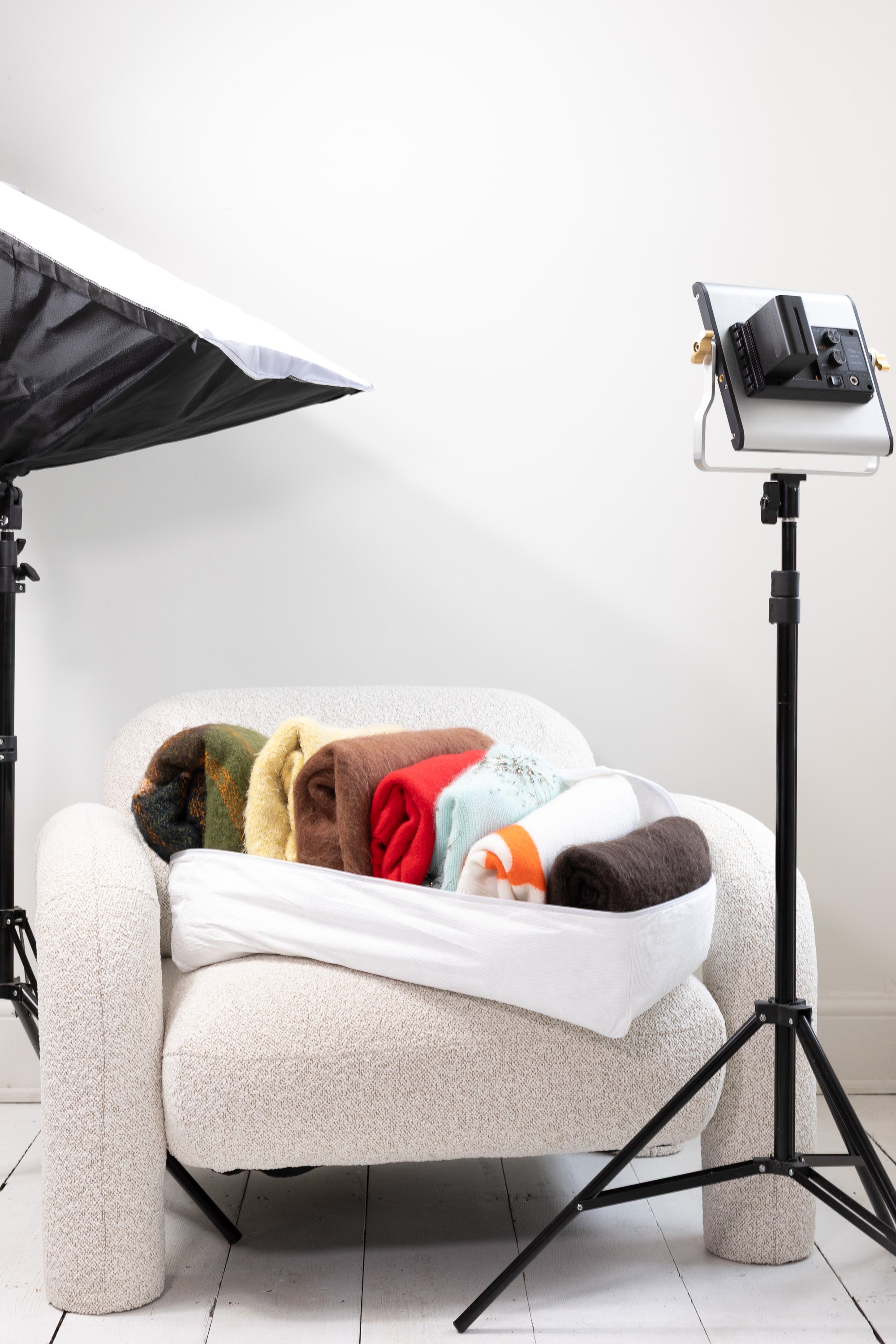
- Knitwear: folded flat with acid-free tissue between layers, packed into a Tyvek storage bag
- Coats and tailoring: hung on wide padded hangers inside Tyvek garment bags — never plastic dry-cleaning bags, which trap moisture and yellow over time
- Silk: folded with acid-free tissue, in a Tyvek bag, never plastic
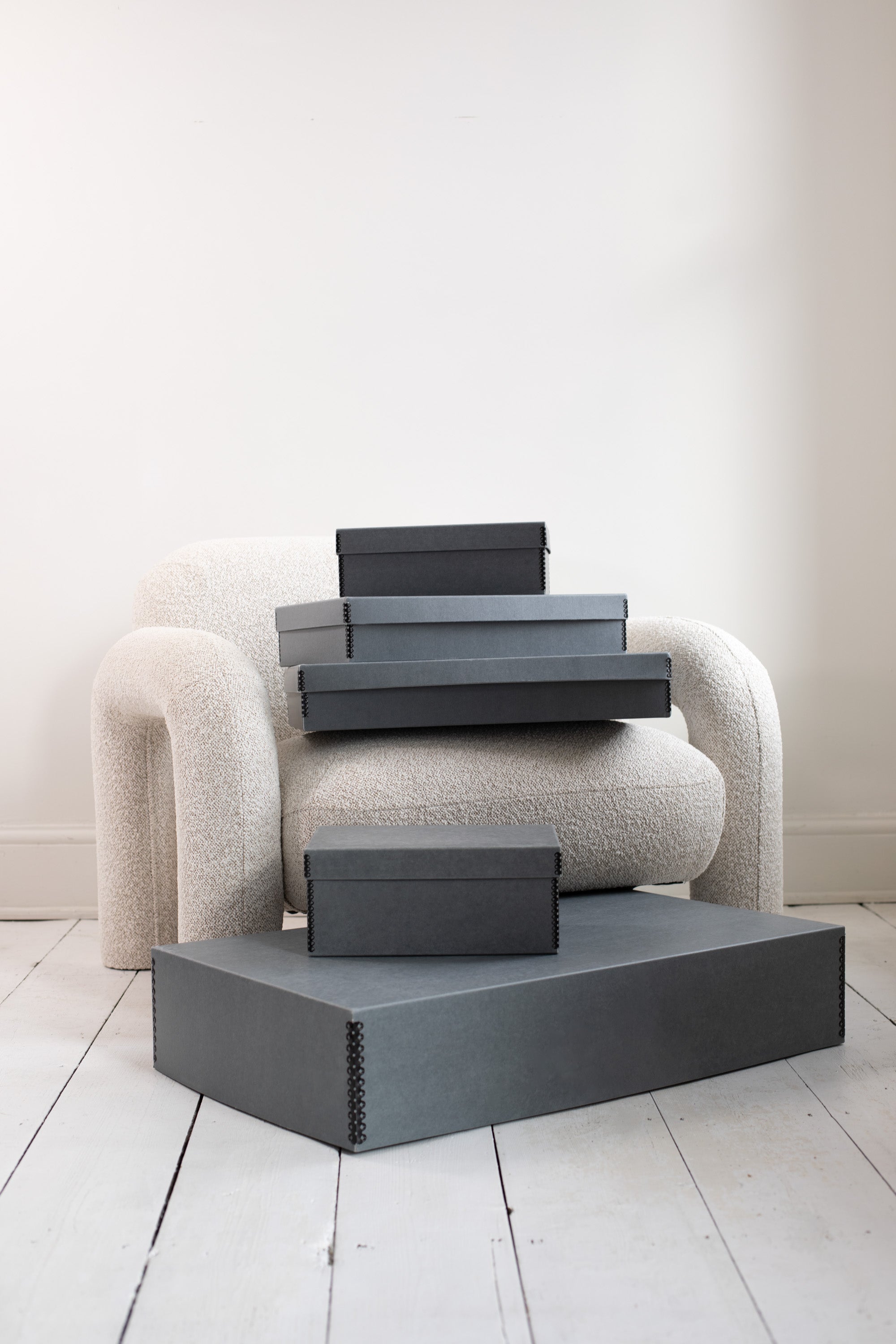
- Accessories (scarves, hats, gloves): washed, dried, folded with tissue, into a Tyvek bag or acid-free box
Tyvek is the same material museum textile collections use because it blocks dust, light, and pests while letting the fibre breathe. A sealed plastic container risks trapping residual moisture — the one thing stored wool needs to avoid even more than moths.
Step five: place pheromone traps in the room
Two traps per average bedroom, placed away from the wardrobe — behind the bed, on top of a tall cupboard, in a quiet corner. This is your monitoring system. Check them once a month. If you start catching moths, you have an active population in the room: re-treat the wardrobe with Constrain, freeze any vulnerable pieces, and check whether birds' nests in the loft or eaves might be acting as a reservoir (a surprisingly common source).
Step six: check once a month
Open the wardrobe, give the bags a gentle shake, glance over the traps. Two minutes a month catches anything wrong while it is still fixable. Prevention is much cheaper than restoration.
The whole ritual, in one list
- Wash or dry-clean every piece before storing — every time, no exceptions
- Empty the wardrobe completely and vacuum every surface, corner, and crack
- Dispose of the vacuum contents outside the house immediately
- Treat the empty wardrobe with a light spray of Constrain and let it dry
- Pack knitwear flat in Tyvek bags with acid-free tissue
- Hang coats and tailoring in Tyvek garment bags on wide padded hangers
- Place pheromone traps in the room, never inside the wardrobe
- Check once a month; re-treat at the start of each storage season
Frequently asked questions
Why can't I just hang the trap inside the wardrobe?
Pheromone traps emit a synthetic female moth pheromone to lure adult males. Putting one inside the wardrobe broadcasts an attractant signal directly into the space you are trying to protect, which actively draws moths in. The trap should intercept moths in the room before they reach the wardrobe.
Can I use Constrain at home?
Yes — it is authorised by the HSE for indoor use (10297) and was developed for museums and historic houses; it leaves no smell or staining once dry. Follow the label, ventilate while spraying, and let the wardrobe dry fully before putting clothes back.
How long does Constrain protect for?
The residual film lasts several months — long enough to cover a full off-season storage cycle. Re-treat at the start of each storage season.
Do cedar blocks work at all?
Only briefly, only on newly-hatched larvae, and only while the cedar oil is still strong — rarely the case more than a few weeks after purchase. A pleasant decorative addition; not a moth control strategy.
What if I already have an active infestation?
Empty everything, freeze anything vulnerable for two weeks at −20°C, deep-vacuum and treat the wardrobe with Constrain, place traps in the room, and inspect other dark fabric-storage areas — the loft, under-bed boxes, and upholstered furniture are common reservoirs. If the problem is widespread, repeat the cycle and watch the trap counts to confirm the population is dropping.
Can I treat the clothes themselves with Constrain?
No. Constrain is for surfaces — the inside of the wardrobe, skirting boards, under rugs, and the cracks where larvae live. Never spray it directly onto a garment.
Most moth damage is preventable. The wardrobe that gets the conservation treatment is the one that comes out of every storage season exactly as it went in.